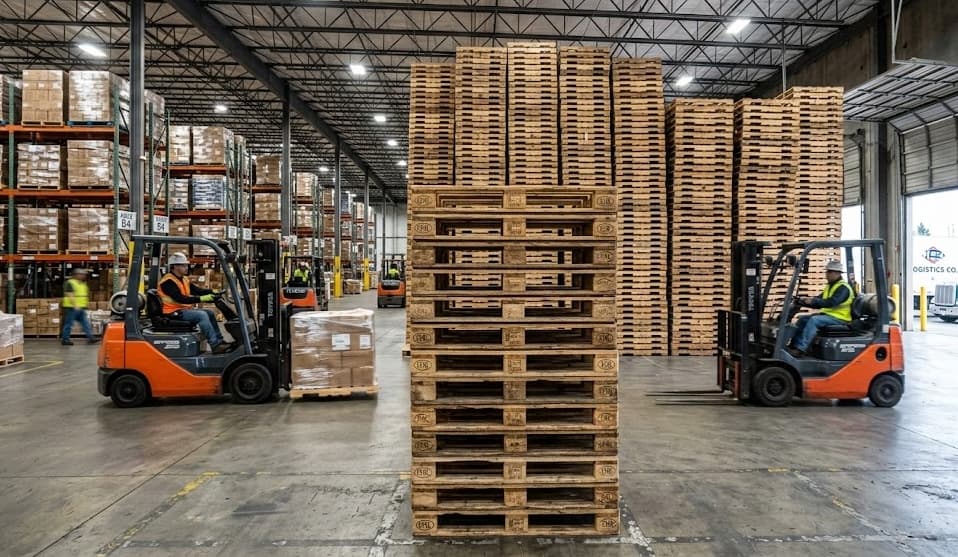
The wood vs. plastic pallet debate is one of the most common questions we hear. The truth is, both materials have legitimate advantages — the best choice depends on your specific application, budget, and priorities.
Cost Comparison
Wood pallets win on upfront cost. A standard 48x40 GMA wood pallet costs $5-20 depending on whether it's new or recycled. An equivalent plastic pallet costs $15-70. However, plastic pallets last 10+ years vs. 3-5 years for wood, potentially making them cheaper on a per-use basis for closed-loop systems.
Durability
Plastic pallets are more durable overall — they don't splinter, crack from moisture, or degrade from pest infestation. However, when a wood pallet is damaged, it can be repaired quickly and cheaply. A damaged plastic pallet typically needs to be replaced entirely, though it can be recycled.
Hygiene
Plastic wins decisively on hygiene. Plastic pallets have non-porous surfaces that can be washed, sanitized, and steam-cleaned. They don't absorb moisture, chemicals, or bacteria. This makes them the preferred choice for food processing, pharmaceutical, and cleanroom applications.
Weight
Plastic pallets are typically 30-50% lighter than equivalent wood pallets. This reduces shipping costs, worker fatigue, and makes them easier to handle. A lighter pallet also means more payload per truckload.
Export/International
Plastic pallets require no heat treatment or fumigation for international shipping (they're exempt from ISPM 15). Wood pallets must be treated and stamped before crossing international borders. For frequent exporters, plastic can simplify compliance.
Sustainability
Both materials can be sustainable. Recycled wood pallets divert waste from landfills, and wood is a renewable resource. Plastic pallets last longer but are made from petroleum-based materials. Both can be recycled at end of life — wood into mulch or biomass, plastic into new plastic products.
Our Recommendation
Use recycled wood pallets for: general warehouse use, domestic shipping, cost-sensitive applications, single-use or one-way shipments. Use plastic pallets for: food and pharmaceutical applications, automated warehouse systems, international shipping, closed-loop supply chains, cleanroom environments.