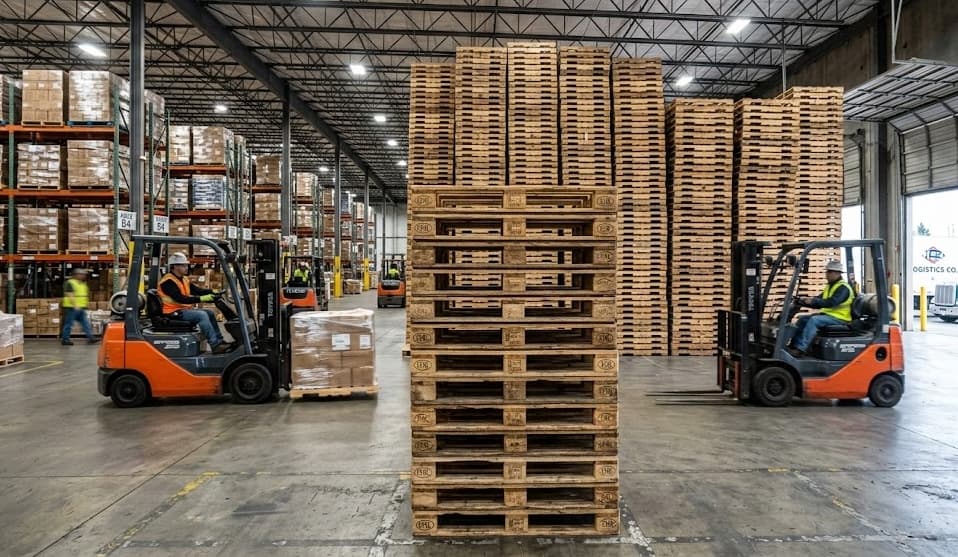
Pallets seem simple — just boards and nails, right? But the manufacturing process involves careful material selection, precision cutting, and quality-controlled assembly. Here's how a wooden pallet goes from raw lumber to a finished product ready for the supply chain.
Step 1: Lumber Selection
The process begins with lumber selection. The most common species for pallets in North America are Southern Yellow Pine (strong, widely available), oak (extremely durable, heavy), and mixed hardwoods (good balance of strength and cost). The choice of species depends on the pallet's intended use and load requirements.
Lumber arrives at the pallet mill as rough-cut cants or boards. The wood is inspected for defects — excessive knots, splits, bark inclusions, or rot — that could compromise structural integrity.
Step 2: Cutting
Lumber is cut to precise dimensions using gang rip saws and crosscut saws. A standard 48x40 GMA pallet requires several components: top deck boards (typically 7 boards, each 40" x 3.5" x 0.625"), bottom deck boards (usually 5 boards with similar dimensions), and stringers or blocks that connect the two decks.
Modern pallet mills use automated cutting lines that can produce components for hundreds of pallets per hour with consistent dimensional accuracy.
Step 3: Assembly
Components are assembled using pneumatic nail guns or automated nailing machines. The nails used are specially designed for pallets — they have annular ring shanks or helically threaded shanks that resist withdrawal much better than smooth nails.
A standard 48x40 pallet uses approximately 60-80 nails. Each nail placement matters — proper nailing patterns ensure the pallet can handle its rated load without failure.
Step 4: Quality Control
Finished pallets are inspected for proper dimensions, nail placement, and overall structural integrity. In high-volume facilities, a sample of pallets may be load-tested to verify that they meet specifications.
Step 5: Treatment (If Required)
Pallets destined for international shipping undergo heat treatment (ISPM 15) — heating the wood core to 56°C for 30 minutes to eliminate pests. After treatment, pallets receive the official IPPC stamp certifying compliance.
The Recycled Pallet Difference
At Sacramento Pallet Co., our process starts not with raw lumber but with used pallets. We inspect, disassemble if needed, replace damaged components with salvaged lumber, and reassemble to create a fully functional pallet at a fraction of the environmental and financial cost of manufacturing new.