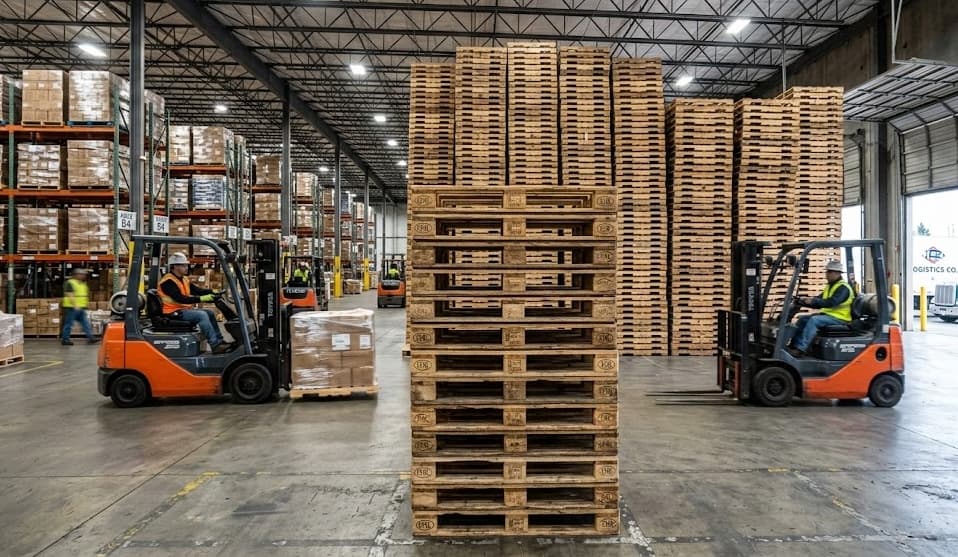
How you store your pallets matters more than most people realize. Improper storage can damage pallets, create safety hazards, and significantly shorten pallet lifespan. A few simple best practices can protect your investment and keep your facility safe.
Stack Height Limits
The most common storage mistake is stacking pallets too high. OSHA doesn't specify a maximum stack height for empty pallets, but industry best practice is to limit stacks to 15 pallets or approximately 6 feet, whichever is less. Taller stacks become unstable and pose a serious toppling risk.
For new or Grade A pallets with consistent dimensions, you may be able to safely stack up to 20 high on a flat, level surface. For mixed grades or older pallets, keep stacks under 12 to account for dimensional inconsistencies.
Indoor vs. Outdoor Storage
Whenever possible, store pallets indoors or under a covered area. Prolonged exposure to rain, sun, and temperature extremes accelerates wood degradation. UV radiation breaks down wood fibers, rain promotes rot and mold growth, and freeze-thaw cycles can split boards.
If outdoor storage is unavoidable, place pallets on a well-drained surface (not directly on dirt), orient stacks so the top pallet's boards shed water, and rotate stock so no pallets sit outside longer than necessary.
Fire Safety
Pallet storage areas are a significant fire risk. Dry wood pallets can ignite quickly and burn intensely. Follow these fire safety guidelines: maintain at least 25 feet of clearance from buildings, keep stacks separated by a minimum of 8 feet of clear aisle space, never store pallets near heat sources, electrical panels, or flammable materials, and ensure fire extinguishers are accessible and employees are trained.
Pest Prevention
Wood pallets can attract insects, particularly in warm and humid environments. Prevent pest issues by keeping storage areas clean and free of debris, ensuring adequate ventilation around stacks, rotating stock on a first-in first-out basis, and inspecting incoming pallets for signs of infestation. Heat-treated pallets are less susceptible to pests than untreated ones.
Organization
Organize pallets by size and grade. This makes it easier to pull the right pallet for the right job, reduces handling time, and prevents damage from mismatched stacking. Mark storage areas clearly and train staff on your pallet management procedures.