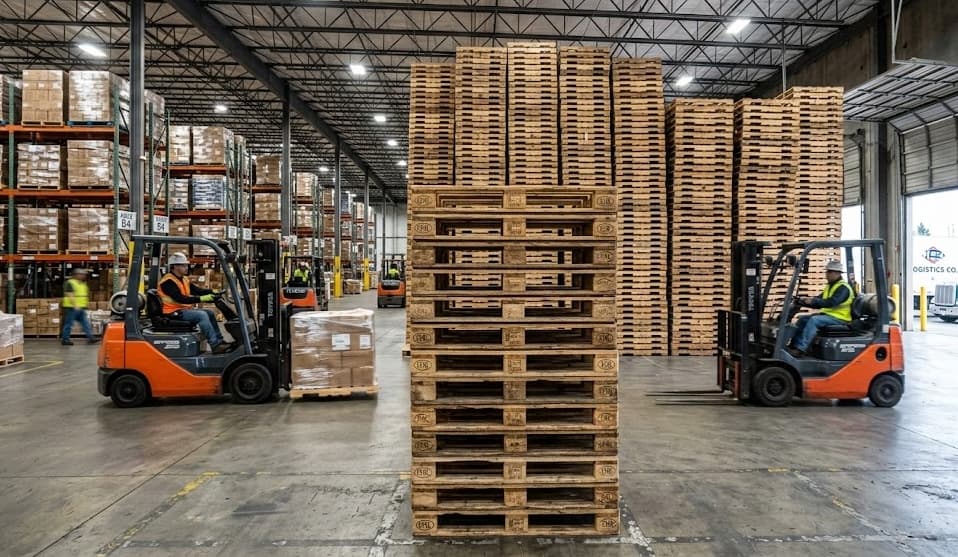
Pallet-related injuries account for tens of thousands of workplace incidents annually in the United States. From protruding nails to collapsed stacks, the risks are real but entirely preventable. Here are 10 essential safety rules every warehouse should implement.
1. Inspect Before Use
Every pallet should be visually inspected before being loaded. Check for cracked or missing boards, protruding nails, and structural damage to stringers or blocks. A 10-second inspection can prevent a serious accident. Reject pallets that show significant damage and route them to repair.
2. Match the Pallet to the Load
Never exceed a pallet's rated load capacity. A standard 48x40 GMA pallet is typically rated for 2,500 lbs dynamic load, but recycled pallets in lower grades may have reduced capacity. Always know your pallet's rating and your load's weight before combining them.
3. Distribute Weight Evenly
Uneven loads cause pallets to flex, warp, and potentially collapse. Distribute weight as evenly as possible across the pallet surface, keeping the center of gravity low. Heavier items go on the bottom, lighter items on top.
4. Don't Stand on Pallets
Pallets are designed to support uniformly distributed loads, not concentrated point loads like a person's feet. Standing on a pallet can cause boards to break unexpectedly. Use proper step stools or ladders instead.
5. Limit Stack Heights
Keep empty pallet stacks under 6 feet high. Taller stacks become unstable and can topple, causing serious crush injuries. In areas with foot traffic, consider even lower limits. Always stack on level, solid ground.
6. Use Proper Lifting Techniques
A standard wood pallet weighs 30-50 lbs. When manually handling pallets, use proper lifting form: bend at the knees, keep the back straight, and get a firm grip. Better yet, use mechanical handling whenever possible — a pallet jack is always safer than manual lifting.
7. Wear Appropriate PPE
At minimum, warehouse workers handling pallets should wear safety-toe boots, work gloves to protect against splinters and nails, and high-visibility vests in areas with forklift traffic. Depending on the environment, additional PPE may be appropriate.
8. Keep Aisles Clear
Never leave pallets in aisles, walkways, or emergency exits. Stray pallets are a tripping hazard and can block evacuation routes. Designate specific storage areas for empty pallets and enforce clean-aisle policies.
9. Handle Damaged Pallets with Care
Broken pallets with splintered wood or protruding nails are especially dangerous. Handle them with heavy work gloves and segregate them from good pallets immediately. Don't try to repair pallets on the warehouse floor — send them to a dedicated repair area or to your pallet recycler.
10. Train Your Team
All warehouse employees should receive pallet safety training as part of their onboarding and annual refresher courses. Cover proper inspection procedures, load limits, stacking rules, and what to do when a pallet is damaged. A well-trained team is your best defense against pallet-related injuries.