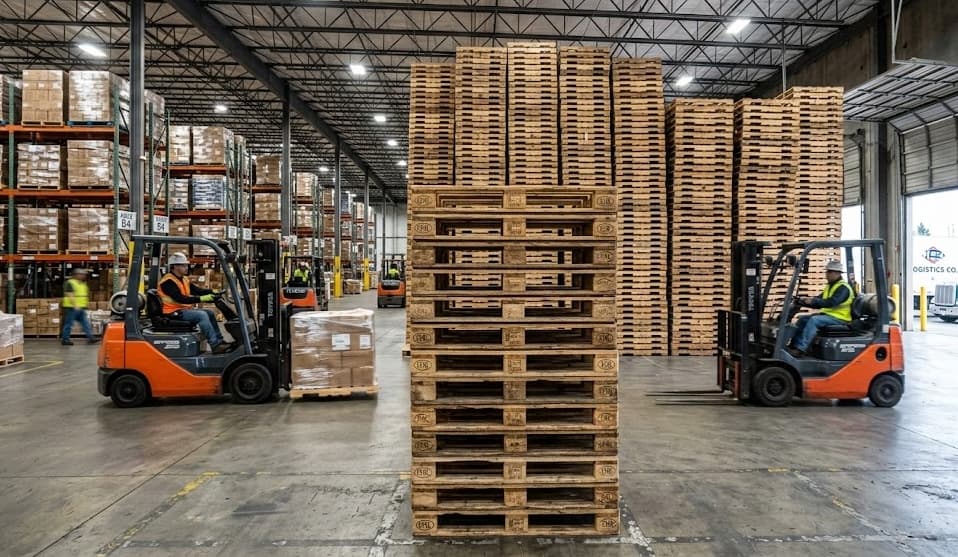
Clean & Durable
Plastic Pallets
Durable, hygienic, and maintenance-free. Ideal for pharmaceutical, food processing, and export applications.
When Plastic is the Right Choice
Plastic pallets excel in environments where hygiene, consistency, and durability are critical. They won't splinter, absorb moisture, or harbor bacteria — making them ideal for food, pharmaceutical, and cleanroom applications.
While the upfront cost is higher than wood, plastic pallets offer significantly longer lifespans (10+ years vs. 3-5 years for wood) and require zero maintenance. They're also exempt from ISPM 15 regulations, simplifying international shipping.
We offer both new and recycled plastic pallets in a variety of configurations — nestable, stackable, rackable, and export-grade. All our plastic pallets are made from recyclable materials and can be recycled again at end of life.
Plastic pallets are also the preferred choice for automated warehouse systems. Their precise, uniform dimensions ensure reliable performance on conveyors, automated storage and retrieval systems (AS/RS), and robotic handling equipment where even small dimensional variations can cause jams and downtime.
Key Advantages
Hygienic
Non-porous surface is easy to clean, sanitize, and doesn't harbor bacteria or pests. FDA and USDA compliant options.
Consistent
Uniform weight and dimensions every time — ideal for automated systems and conveyors. No warping or swelling.
Durable
10+ year lifespan with zero maintenance. Won't splinter, crack, or absorb moisture. Impact-resistant polymer construction.
Export Ready
No heat treatment or fumigation required for international shipping (exempt from ISPM 15). Ship globally without compliance delays.
Lightweight
Up to 50% lighter than equivalent wood pallets, reducing shipping costs and worker fatigue. More payload per truckload.
Sustainable
100% recyclable at end of life. Many options available made from post-consumer recycled plastic. Closed-loop lifecycle.
Types of Plastic Pallets
Each type is engineered for specific use cases. Choose the configuration that matches your operational needs.
Nestable
Stack inside each other when empty, saving up to 70% storage space. Nine-leg design allows nesting from any direction. Lightweight and easy to handle.
Best for: Export, return logistics, storage savings
Stackable
Designed to stack on top of each other when loaded, with reinforced corners and edges. Perfect for warehouse storage and standard racking systems.
Best for: Warehouse storage, racking, heavy loads
Rackable
Engineered for use in selective, push-back, and drive-in racking systems. Highest load ratings and structural reinforcement with steel inserts.
Best for: Automated warehouses, racking systems
Wood vs. Plastic Comparison
Not sure which material is right for your application? Here's a side-by-side comparison.
Ideal Industries for Plastic Pallets
Food & Beverage
FDA-compliant, washable, and resistant to moisture, chemicals, and bacteria. Perfect for food processing plants, bakeries, breweries, and cold storage facilities.
Pharmaceutical
GMP-compatible with smooth, non-porous surfaces that can be steam-cleaned and sanitized. No splinters, no contamination risk, no pest concerns.
Retail & Display
Clean, uniform appearance makes plastic pallets ideal for retail store displays and customer-facing logistics. Consistent dimensions for automated store systems.
Chemical & Hazmat
Resistant to acids, solvents, and corrosive chemicals. Non-absorbent surfaces prevent contamination accumulation. Easy to decontaminate after spills.
Export & International
ISPM 15 exempt — no heat treatment, no fumigation, no stamps required. Ship internationally with zero compliance paperwork for the pallet itself.
Automated Warehouses
Uniform dimensions and weight ensure reliable performance on conveyors, AS/RS systems, and robotic handlers. Eliminates jams caused by warped or inconsistent pallets.
Available Standard Sizes
We stock the most common plastic pallet sizes and can source specialty sizes on request.
48" x 40"
GMA Standard — most popular
48" x 48"
Drum and square-load applications
42" x 42"
Telecom and paint industries
48" x 42"
Chemical and military spec
40" x 40"
Dairy and dairy products
48" x 36"
Beverage industry standard
44" x 44"
Oil and chemical drums
36" x 36"
Small-format and retail
Plastic Pallet FAQ
Are plastic pallets more expensive than wood?
Upfront, yes — typically 2-4x the cost of a wood pallet. However, plastic pallets last 10+ years vs. 3-5 for wood, and require no repairs. In closed-loop systems where pallets are reused many times, the per-use cost of plastic is often lower than wood.
Can plastic pallets be repaired?
Unlike wood pallets, plastic pallets generally cannot be field-repaired when damaged. However, they are far more resistant to the types of damage that commonly affect wood pallets (splitting, cracking, moisture damage). Damaged plastic pallets can be recycled into new plastic products.
Are plastic pallets food-safe?
Yes. Our plastic pallets are made from FDA-compliant materials (typically HDPE or PP). They have non-porous surfaces that resist bacteria, mold, and moisture, and can be washed and sanitized between uses.
Do you sell used/recycled plastic pallets?
Yes. We carry a selection of used plastic pallets in good condition at significant savings vs. new. Availability varies — contact us with your requirements and we'll let you know what's in stock.
Can plastic pallets be used in freezer environments?
Yes. Our plastic pallets are rated for temperatures from -40°F to 150°F. They won't become brittle in cold storage or warp in heated environments. This makes them ideal for cold chain logistics.
What colors are available?
Standard colors include black, blue, and gray. Custom colors (red, green, yellow, white) are available for orders of 500+ pallets. Color coding can help with product segregation, facility identification, or customer branding.
Extend Your Investment
Plastic Pallet Care & Maintenance
Plastic pallets require far less maintenance than wood, but following these guidelines will maximize their already-long lifespan.
Regular Cleaning
Wash plastic pallets with standard pressure washers and mild detergent. For food-contact applications, use FDA-approved sanitizers. Plastic's non-porous surface allows for complete sanitization — unlike wood, there are no microscopic pores where bacteria can hide.
Inspect for Cracks
While plastic pallets are highly durable, check periodically for hairline cracks near fork entry points and load-bearing surfaces. Small cracks can propagate under repeated stress. Catching them early helps you retire pallets before they fail under load.
Avoid Impact Damage
Plastic pallets are resilient but can crack from sudden point impacts — especially at low temperatures. Train forklift operators to approach cleanly without dragging forks. In freezer environments, allow pallets to warm slightly before subjecting them to impacts.
UV Protection
Prolonged outdoor UV exposure can degrade some plastic materials over time, causing discoloration and brittleness. If outdoor storage is required, choose pallets with UV stabilizers in the resin compound, or store under shade structures.
Common Questions
Frequently Asked Questions
When should I choose plastic pallets over wood?
Plastic pallets are ideal for clean environments like food processing and pharmaceuticals, automated warehouse systems, export shipping without heat treatment, and applications requiring washable, hygienic surfaces.
Are plastic pallets more expensive than wood pallets?
Plastic pallets have a higher upfront cost but offer longer lifespan, lower maintenance, and no heat treatment requirements for export. For high-cycle applications, the total cost of ownership is often lower.
What types of plastic pallets do you offer?
We offer nestable, stackable, and rackable plastic pallets in standard and custom sizes. Options include solid deck, perforated deck, and open deck designs for various load and drainage requirements.
Can plastic pallets be recycled at end of life?
Yes, plastic pallets are fully recyclable. When they reach end of life, we accept returns and ensure the material is sent to appropriate recycling facilities for processing into new products.
Do plastic pallets meet export shipping requirements?
Yes, plastic pallets are exempt from ISPM 15 heat treatment regulations, making them ideal for international shipping without additional certification or documentation.
Plastic Pallet ROI Analysis
Higher upfront cost, lower total cost. Here is how the math works for a closed-loop operation using 200 pallets.
Wood Pallets (5-Year Cost)
Plastic Pallets (5-Year Cost)
* Example assumes a closed-loop system with 200 standard pallets. Wood pallets replaced every 18 months on average. Actual costs vary by usage intensity and environment.